Showing posts with label Europe. Show all posts

Ohrid, Macedonia - Travel Guide and Travel Info

The best tourist destination in Macedonia and one of the best on the Balkans, Ohrid is a city located on the eastern shore of Lake Ohrid in the Republic of Macedonia. Ohrid is the leading tourist attraction in Macedonia. It is a town of vast history and heritage, it was made a UNESCO heritage site in 1980. This incredible city is without a doubt the jewel in Macedonia's crown. The city is rich in picturesque houses and monuments, and tourism is predominant. 


The best fact about this holiday resort is that this city once had 365 churches, one for each day of the year, and because of that they call it the Macedonian Jerusalem. Located between the large mountains up to 2.800 meters and Lake Ohrid, it is not only a place of historic magnificence but also of outstanding natural beauty, which brings travelers from all over the world.


Ohrid is one of the not so many cities in the Balkans and further that had passed untouched throughout the classical period. This ancient city has seen so many changes of civilization achievements followed by the different falls and rises. This city survived the decline of the classical civilization at that period and lived under their new names till the present time. 


Whether you're looking to rough it or relax in style, Ohrid can cater for every taste, budget and personal interest. Since there is a large number of tourist coming to Ohrid, this destination is not as cheap as it used to be before, but it is still more affordable than some of the other Balkan summer attractions, such as Montenegro, Bulgaria, Greece, Albania, Croatia etc. 
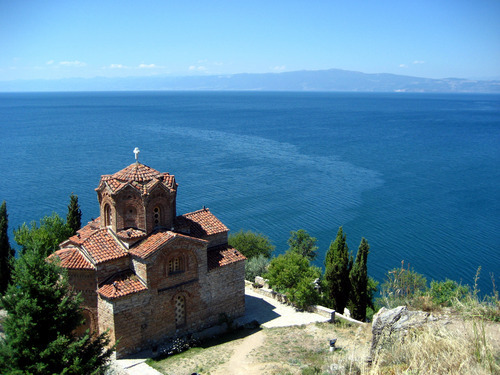


Churches that you shouldn't miss while you are there: St.Sophia church, St.Bogorodica Perivlepta, St.Jovan Kaneo, St.Pantelejmon – Plaosnik, St.Naum monastery ! Other destinations to visit in Ohrid: Old Bazaar, Mesokastro Settlement, Kaneo Settlement, Ohrid Fortifications, King Samoil Fortress, Antique Theatre, Ohrid Traditional Architecture, Icon Gallery, Zeynel Pasha Teke. Most important city events: Ohrid Swimming Marathon, The Balkan Folklore Festival, Ohrid Summer Festival, etc. 


Ohrid hotels and restaurants 

Restaurants are one of the most visited places in Ohrid when the sun goes down. The Macedonian cuisine is one of the best in the world. Their famous national food and deliciously prepared barbecue, combined with some of the best wines in the Balkans makes the nights unforgettable. 


Accommodation is not an issue in Ohrid. There are very nice hotels in the city, next to the beautiful lake and next to some of the magnificent churches which is one of the biggest reasons why people come to this city besides the outstanding Ohrid Lake. No matter if you are looking for a luxury accommodation or you travel on a budget, there are lots of offers for you. You can choose some of the top hotels or there are also private apartments which are cheap and cozy. 


Ohrid has been a living town for two thousand and four hundred years. It is the legitimate descendant of the shining Lychida, a town whose achievements were woven into the tapestry of a powerful ancient civilization. It is located southwest of Skopje, west of Resen and Bitola, and east of Elbasan and Tirana in Albania. It has about 42,000 inhabitants, making it the seventh largest city in the country. The city is the seat of Ohrid municipality. 


Ohrid map

Tate Modern Museum, London - Travel Guide

One of the many highly-regarded museums in London is Tate Modern. This museum is famous all over the world particularly because it owns the biggest collection of modern art all across Europe. Aside from its name, it is also known as Britain’s National Gallery of Modern Art. Tate Modern is a part of the prestigious Tate Group alongside Tate Britain, Tate Liverpool, Tate Online and Tate St. Ives.


If you are having a trip in London, do not miss out Tate Modern. Being a former Bankside Power Station, you will find the museum in London Borough of Southwark’s Bankside area. Tate Modern takes pride of its vast collection of British art from the 1900’s up to the modern times, as well as international collection contemporary art, all of which arranged thematically. Among all modern art museums in the world, Tate Modern is the most-visited one, generating more than 4 million of visitors per year. 


In 1992, there was a competition to construct a building that will give home to the country’s modern art. In 1995, emerged as winners were Herzog & de Meuron. The builders, instead of demolishing the old power station, resurrected the building back to life. After it was finished, the Tate Modern became the representation of what ‘’adaptive reuse’’ is like—the process of resurrecting old buildings by infusing new life.


From the outside, you will notice that Tate Modern still exude that 20th century factory-style façade—only today, there are accents of creativity and modernity to give the building a facelift. The interior, on the other hand, is characterized by concrete floors, taupe walls and steel girders. Half of the main building is where an enormous collection of contemporary art and modern designs gathered not just in Britain but from the entire globe are showcased. Tate Modern has four wings and each wing is categorized according to the art’s subject or theme.


The most stunning feature of the Tate Modern must be the prodigious Turbine Hall, once housed by the electricity generators of the old Bankside Power Station. The Turbine Hall is a five-storey structure, and each floor occupies a vast space of 3,400 sq.mt. The hall was recently used as a venue for commissioned works of budding contemporary artists. Now, it serves as a hall for important events and exhibitions relating to art. 


Because Tate Modern is one of the important assets of London when it comes to heritage and art, a tour to this spectacular establishment should not be missed when traveling to this side of the city. The closest station is Blackfriars through the new entry on the south. Southwark, St Paul's and Mansion House north of the river via Millenium Bridge are other options. Between Southwark tube station and Tate Modern, there were lamp posts that signals the way to the museum. 

Centre Pompidou, Paris, France - Travel Guide

Centre Georges Pompidou, or simply Centre Pompidou, sitting in the Marais District right in the heart of Paris, is a timeless and unique form of architecture that unveils the stunning view of the capital. This structure serves as Paris’ center of French art and culture, bringing together the magnificent works of men in one perfect location. The upper floors of Centre Pompidou have the best spots for sighting the iconic landmarks France is proud to have, such as the Notre Dame, the Sacré-Coeur, and of course, the ever-famous Eiffel Tower


The famed building is a collaboration of architectural masters Richard Rogers, Renzo Pianoand and Gianfranco Franchini. The honor of designing Centre Pampidou was granted to the team as a result of an architectural design competition held in 1971 which comprised of almost 600 entries. The design of the building clearly reflects what high-tech architecture means, and National Geographic described the reaction to the structure as ‘’love at second sight.’’ 


When Richard Rogers was given a Pritzker Prize in 2007, New York Times declared architect Roger as a high-tech iconoclast by completing Centre Pampidou, and that the innovative design of the building, made famous because of its bizarre architecture where all the vents, pipes and elevator are seen outside the building, ‘’turned the architecture world upside down.” The construction of the building, which was completed in 1977, initially cost 993 million francs and the subsequent construction and renovations cost 576 million.


The entirety of Centre Pampidou is dedicated to art and culture. All the six floors of the building are employed for exhibits and expositions of classic and priceless art pieces. In fact, it is in Centre Pampidou where the largest contemporary and modern art museum in Europe is seen. Its more than 7,000 displays of art pieces include the ones that are considered to be the world’s greatest artworks. 


The works of the world-known modern artists like Picasso, Kandinsky, Matisse, Miro, Chagall, Léger, Klein, Dali and Dubuffet are displayed here, alongside the works of famous contemporary artists such as Hentai, Buren, Boltanski, Twombly, Opalka, Tallon, Widmer and Garouste. Apart from these permanent art expos, the building also gives venue to new and promising modern art talents by giving space to their masterpiece in temporary exhibits. 


Being the home of the world’s famous art pieces makes Centre Pampidou a paradise for cultural and art aficionados. Its large quantity of displays and the abundance of art make Centre Pompidou a unique place for appreciating famous artists’ mastery in art.

British Museum, London - Travelers Guide

London is one the most-toured cities in Europe, and the strength of its destinations extensively relies on heritage and arts. Going to London means visiting museums and appreciating what’s housed there—may the theme is of culture, history, timeless art or contemporary design. British Museum, dedicated to human history and culture, dominates the line-up of London’s museums. To date, the prestigious museum plays a sanctuary to almost 8 million collections, probably the largest of all collections in the world.


British Museum started out as a universal museum with an initial collection from physician and naturalist Sir Hans Sloane. At that time, the collection reached as high as 70,000 pieces including some 40,000 books, 7,000 manuscripts, and an extensive collection of natural history specimens. The establishment of British Museum is something new in the history of the country: it was national, it did not belong to royalty or church and it was open to the public. 


For the last seven years, British Museum is one of London’s most famous attractions. The massive building is divided into several departments. The Department of Ancient Egypt and Sudan has the largest collection of Egyptian antiquities outside the Egyptian Museum of Cairo. Sir Hans Sloane had an initial collection of Egyptian antiquities of just 160 pieces, and now in modern times, it has grown to almost 100,000 objects. The key highlights of Egyptian collection includes The Rosetta Stone, The Battlefield Palette, Colossal red granite statue of Amenhotep III and Mummy of Ginger, to name a few.


Over 100,000 pieces from the Classical World are housed in the British Museum’s Department of Greece and Rome. The collection comprises of objects gathered from as far the Greek Bronze Age up to the era of Roman Emperor Constantine I. The highlights of this department include the famous sculpture from the Parthenon in Athens and the Mausoleum at Halicarnassus and the Temple of Artemis at Ephesos, which are considered two of the Seven Wonders of the Ancient World. Important collection of ancient jewelry, Roman glass, Greek vases, bronze and silver are also displayed in the Department of Greece and Rome.


The archeology and art of Europe from the ancient times up to the present, the national collection of horology, and important treasures such as Esquiline Treasure, Carthage Treasure, First Cyprus Treasure, Mildenhall Treasure, Vale of York Hoard, Lampsacus Treasure, Water Newton Treasure and Hoxne Hoard are among the pride of the Department of Prehistory and Europe. Completing the division of British Museum are Department of Middle East, Department of Asia, Department of Africa, Oceania and the Americas, Department of Prints and Drawings, Department of Coins and Medals, Department of Research and Conservation, Libraries and Archives.


The Eiffel Tower, Paris, France

The Eiffel Tower, or La Tour Eiffel, is the iconic and widely-admired landmark of Paris. Standing on Champ de Mars, it has a towering height of 324 meters that make it France’s 2nd tallest structure. For 41 years until 1930, Eiffel Tower was hailed as the world’s tallest man-made composition. Due to its unconventional design, the tower was heavily criticized by France’s leading artists. But Eiffel tower proved otherwise, and in fact, even became the country’s highly-respected cultural icon. Now, Eiffel Tower not only serves as Paris’ prime attraction, the structure is marked as the most-visited paid monument in the world as well.


The tower was designed and constructed by the company of engineer Gustave Eiffel, the same company that built the internal frame of the Statue of Liberty. The company’s chief engineers, Maurice Koechlin and Emile Nouguier, were the ones responsible for the tower’s original drawings. The purpose of the tower was to serve as an entrance arch to 1889 World’ Fair that would celebrate the centennial of the French Revolution. The foundation was laid on January 28, 1887 and the main structural composition ended on March of 1889. The lifts were not yet available when Eiffel Tower was opened to France’s government officials, media and press, so the attendees had to ascend by foot which took for more than an hour.


The wrought iron used in the Eiffel Tower weighs around 7,300 tons. The entirety of Eiffel Tower, including non-metal elements, weighs around 10,000 tons. When it was finished, three restaurants occupied the first level and there were apartments reserved for engineer Gustave Eiffel’s guests. It is said that the tower was not meant to be a permanent sight in Paris and it would only serve for a mere 20 years. Gustave Eiffel could not accept that his precious work would be dismantled so he turned the tower into an indispensable asset of science and discovery. The engineer installed laboratories on the third level of the tower and invited scientists to perform their experiments there.


From then until now, the Eiffel Tower serves as the heart of Paris’ cityscape. This is undoubtedly Paris’ most-enticing structure that attracts millions upon millions of tourists around the globe. Since its public opening in 1889, Eiffel Tower already gathered 250 million of visitors from all over the world. Two restaurants occupy the Eiffel Tower-- Le 58 tour Eiffel found on the first floor and Le Jules Verne on the second floor. A banquet hall, champagne bar and several specialized shops are also within the tower’s grounds. Since there are tons of visitors to accommodate, the Eiffel tower is open all year long—no breaks, no holidays. 


Trafalgar Square, London - Travel Guide

Trafalgar Square is an open space in central London that serves as a tourist attraction in the City of Westminster. In every season, there are a lot of things to do and see in Trafalgar Square as it is rich of historical museums, fine galleries, nature parks, high-end shops and upscale restaurants. Trafalgar Square highlights some of the important landmarks of London and certainly, this is one of the best and beautiful squares London has to offer. There is no other square in the world can hold such a remarkable beauty and take pride of its relevance in history.


London and the Big Ben are synonymous to each other. Officially named as St. Stephen’s Tower, the Big Ben, London’s most recognized landmark, erects within the grounds of Trafalgar Square. Nelson’s Column is also found here, a landmark that gives tribute to Britain’s greatest Naval Commander. Admiral Lord Horatio Nelson led a fleet of 27 British Navy ships to fight a fleet of 33 French and Spanish ships. He was a significant instrument in defeating the enemy of superior strength without compromising any of the British Navy ships. 


The oldest Royal Park of the country is nicely sitting in Trafalgar Square. St. James Park, a stunning open space with a size of 58 acres, is a major attraction of the square. This park plays hosts to concerts, gardens, statues and monuments, cafes and pastry shops and open-air theatre venue. Three palaces encircle St. James Park each boasting of distinct beauty--House of the Parliament or what used to be Westminster, St. James Palace and Buckingham Palace.


The official residence of Her Majesty, The Buckingham Palace, found a home in Trafalgar Square. This was initially built as town homes, then it evolved into a 775-room palace that is today. The Throne Room and the Picture Gallery are free for the visitors to see, as well as the Ballroom, the largest area of the palace where state banquets are held. Sighted here are the Royal Collection’s greatest treasures and work of art including paintings by Canaletto, Rembrandt and Vermeer and sculptures Chantrev and Canova. The garden of the palace has a majestic, perfectly-manicured landscape.


One of the world’s largest and most important museums is the British Museum that holds a collection of almost 7 million artifact from each continent. This museum joins the rest of relevant establishments, structures and landmarks found in Trafalgar Square. London’s National Gallery is also established in the square, as well as Natural History Museum, Science Museum, and other museums that hold numerous collections of arts, documents and photographs that depict the events of the past. 


The Trafalgar Square is also home to quaint shops, specialty restaurants and local cafes. Trafalgar Square is a witness to London’s Christmas celebrations, New Year’s Eve Fireworks, and other relevant events. The newly-restored LED fountain is one of the inviting elements of the square and people are at awe once it shoots an 80-foot jet of water into the air as it dances to the various projections and colors of the lights.

Stonehenge, Wiltshire, England - Travel Guide

Stonehenge is an ancient monument sitting in Wiltshire, England, 8 miles north of Salisbury and 2 miles west of Amesbury. Stonehenge is probably the most important and the grandest prehistoric monument of the whole of Britain, if not the world. Its magnificent and unbelievable structure has made it as Wiltshire’s natural icon. Many theories are circulating the foundation and built of Stonehenge and up to this day, its function is still unknown and its construction methods remain a mystery.


The Stonehenge that is erected today is the product of the final stage of construction some 3500 years ago. The first stage, probably built in 3100 BC, was out of large earth stone that comprised of a ditch, bank, and the Aubrey holes of about one meter wide and deep, with steep sides and flat bottoms. It is believed to be constructed to serve as either a religious site or a burial place as excavations recovered cremated human bones in some of the stone filling.


The second stage is quite a long and challenging journey that must have started in 2150 BC. 82 gigantic bluestones from the Preseli mountains located in the south-west of Wales were delivered to the site. Each stone was approximately 4 tons, dragged on rollers and sledgers heading to Milford Haven, loaded into rafts, carried by the rivers of Avon and Frome, and dragged again to the land of Wiltshire—an exasperating journey that covered a distance of 240 miles.

The third stage saw the coming of the Sarsen stone, the largest weighing almost 50 tons. Just by the size of the stone, it cannot be determined how the henge was transported to the site. It is believed that the use of sledges and ropes was the only way to do it, with a labor force of 500 or so men to make it move. The Sarsen stones were arranged in an outer circle, and inside it were five trilithons that formed horseshoe pattern. 


The fourth and final stage took place immediately, starting from the horseshoe pattern and the circle that are both visible in the modern-day. The bluestones were erected to create an incomplete circle, while the Heel stones were positioned to serve as an entrance to the circle. This task, and all other actions that involved erecting the stones, was probably done with the help of pre-historic tools. But with the stones’ intimidating height and weight, how the ancient people did it remains to be an interesting mystery.


There are numerous speculations embracing the construction and existence of Stonehenge. Some speculated that the timing of the construction was in accordance to the Solar calendar, while some believed that the site was erected for burial purposes. It is believed to be a place for religious ceremonies and a venue for people who gather to worship, pray and perform tribal rituals. The reasons are still uncertain up to this day but one thing is absolutely true—Stonehenge is undeniably a breath-taking structure and no other structure in the world can replicate such magnificence.